
Russell Holds Off Verstappen by 0.196s to Win in Baku
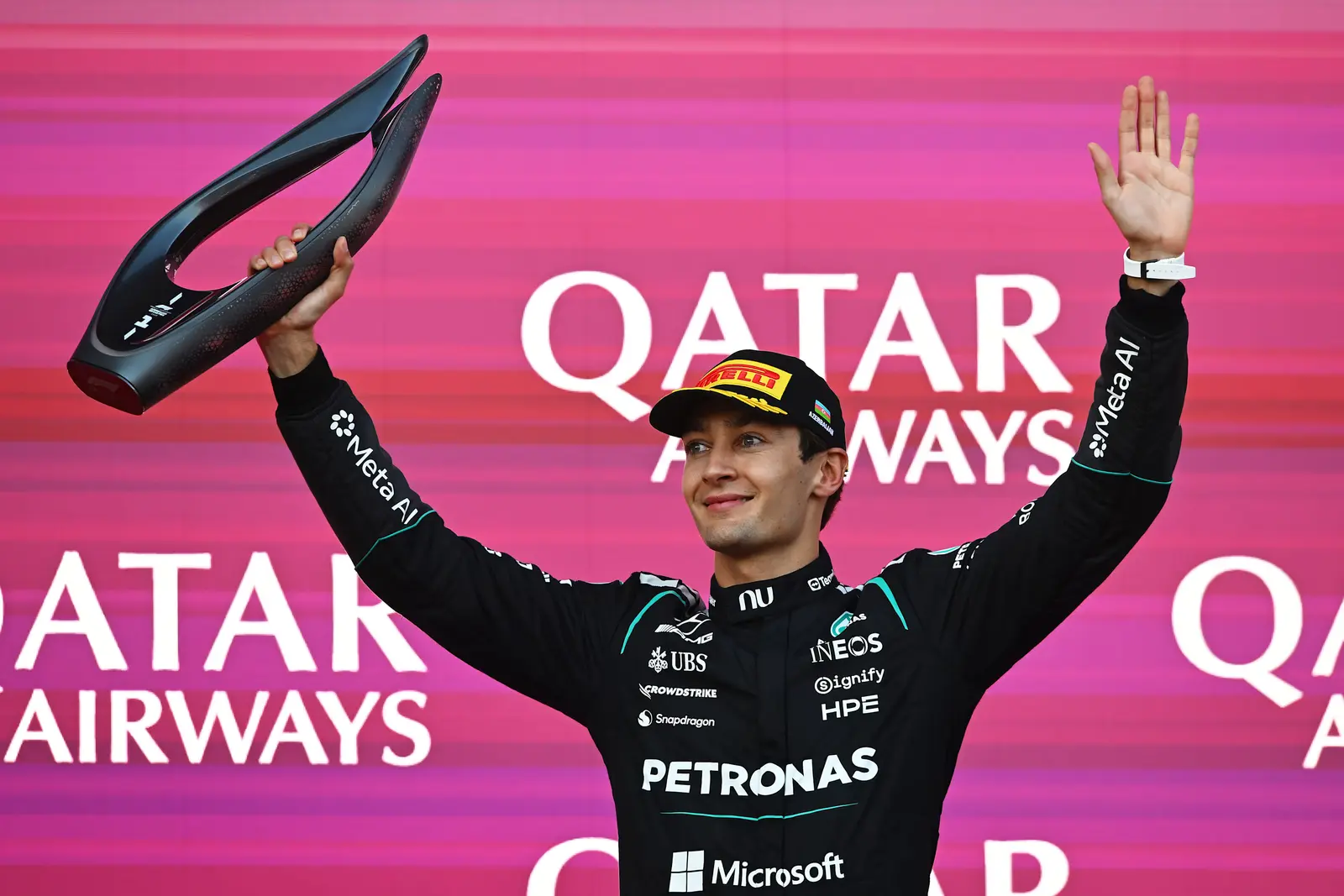
George Russell turned pole into a fiercely defended Azerbaijan Grand Prix win. Max Verstappen almost caught him at the line after a late Mercedes power issue, while Isack Hadjar completed the podium.
Photograph: Formula 1 official media- Winner
- George Russell · Mercedes
- Runner-up
- Max Verstappen · Red Bull · +0.196s
- Third
- Isack Hadjar · Red Bull · +10.704s
- Fourth
- Charles Leclerc · Ferrari
- Fifth
- Kimi Antonelli · Mercedes
- Distance
- 51 laps
- Classification
- 15 finishers · 1 classified DNF · 6 NC
- Next race
- Bahrain Grand Prix · Hosted at Sepang, Malaysia · 2 to 4 October
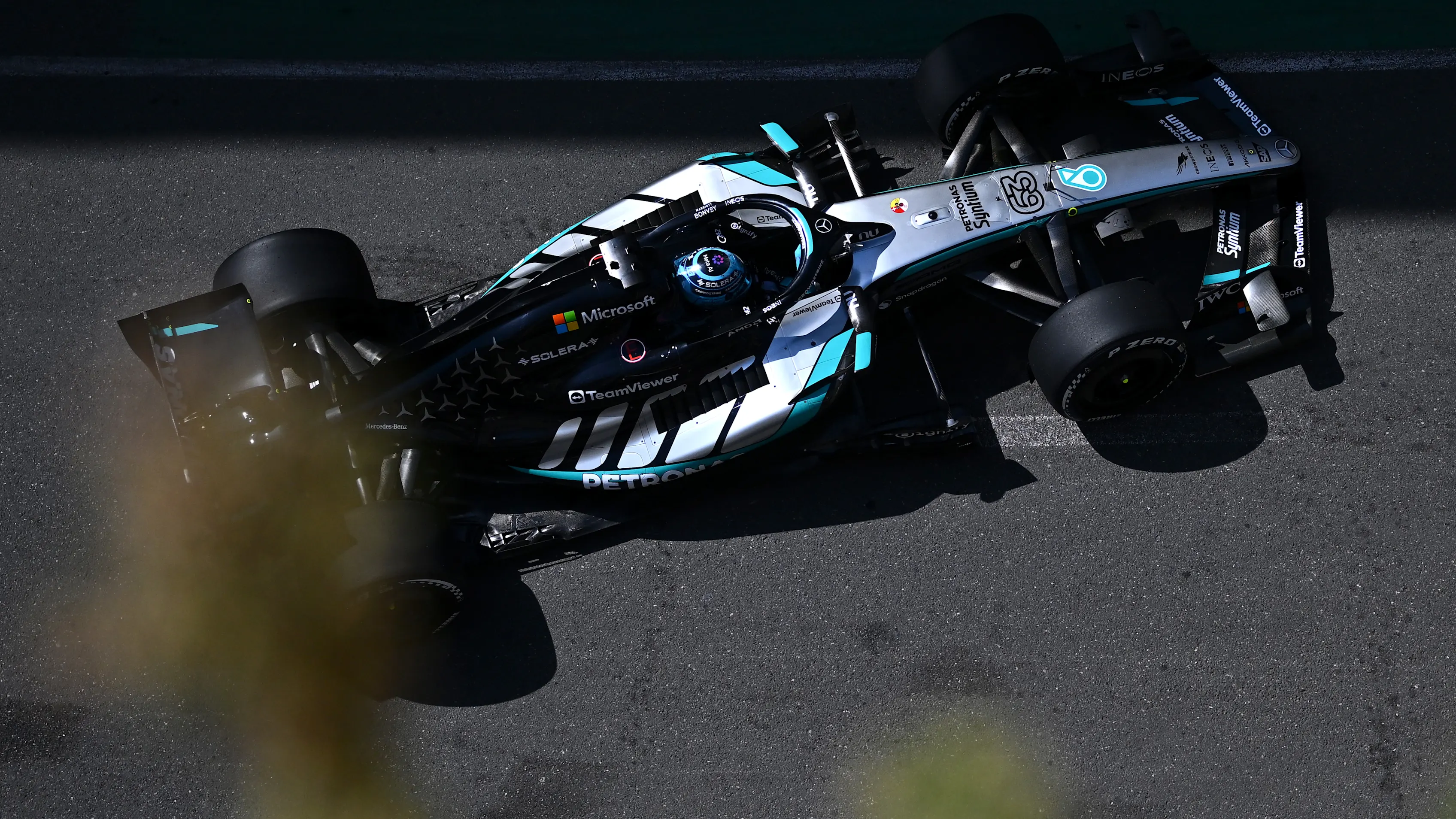
For most of the Azerbaijan Grand Prix, George Russell looked capable of taking a measured victory from pole. At the finish it came down to 0.196 seconds. Max Verstappen closed rapidly on the Mercedes as Russell fought a late loss of power, but the chequered flag arrived before the Red Bull could complete the pass. Baku delivered a result decided by the narrowest margin of Russell’s afternoon.
Isack Hadjar finished third, 10.704 seconds behind, to put two Red Bulls on the podium. Charles Leclerc took fourth for Ferrari and Kimi Antonelli recovered from sixteenth on the grid to fifth in the other Mercedes. The final order tells a story of recovery and opportunity as much as the fight for the lead. Safety cars compressed the race, and every restart asked drivers to balance tyre temperature, braking precision and the long run down Baku’s main straight.
Pole position became a race to control
Russell had arrived at Saturday’s start with the clearest qualifying advantage, having beaten Leclerc by 0.837 seconds on his pole lap. Practice had been more mixed: Russell headed both Thursday sessions, then Verstappen topped FP3. That sequence suggested the Mercedes had one-lap speed, but offered little certainty about how it would behave over 51 laps with traffic and safety-car periods.
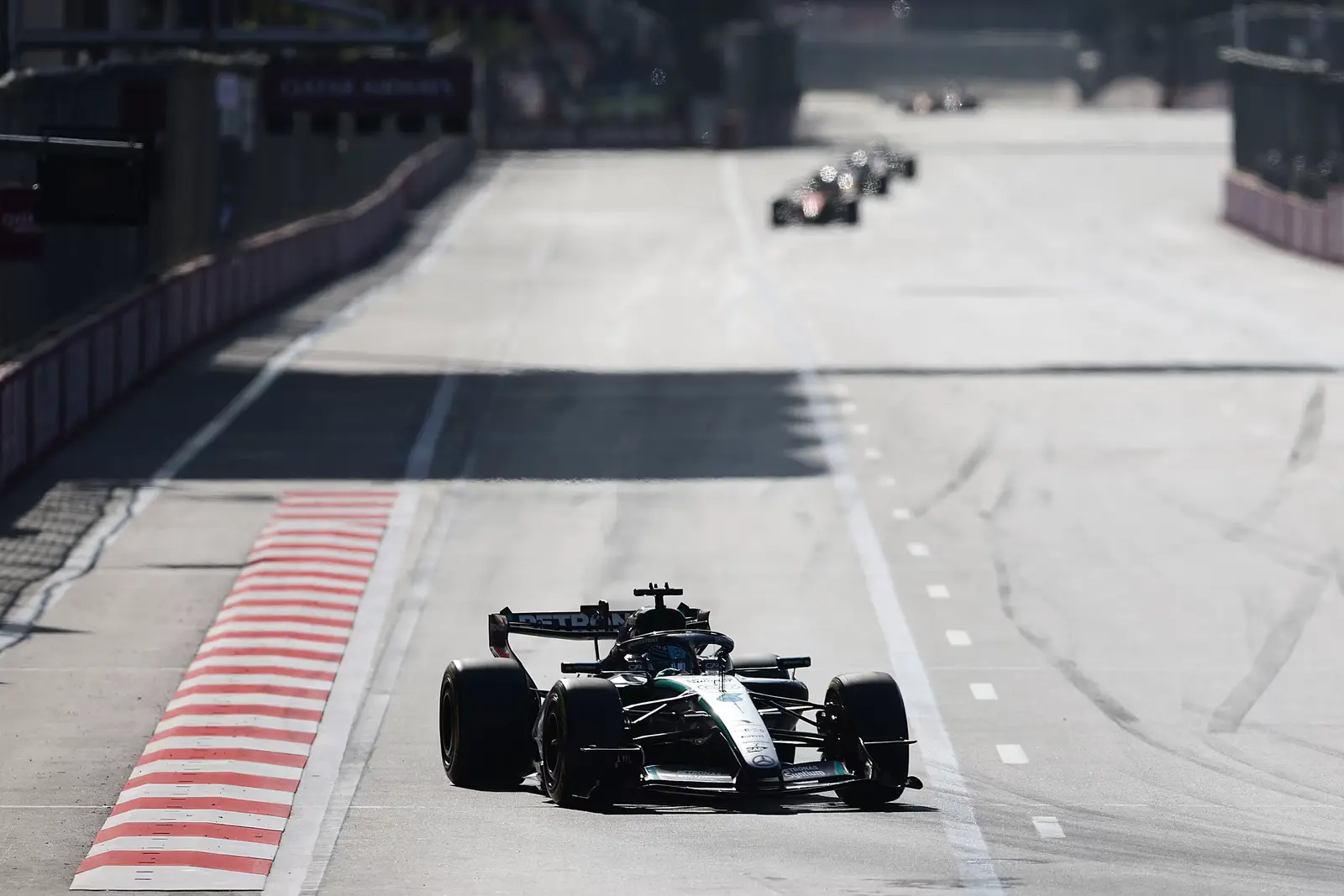
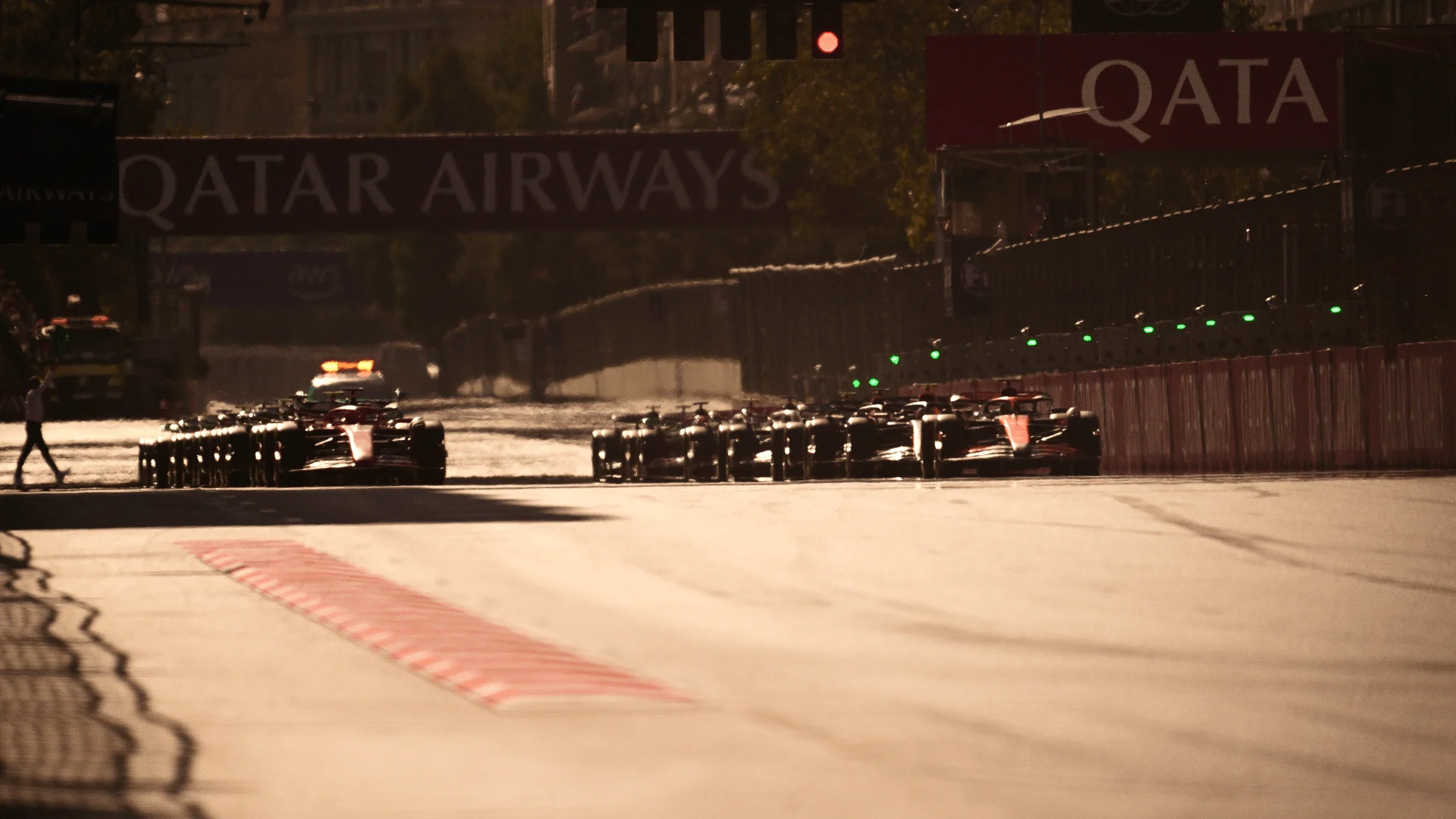
The launch and the early laps mattered because Baku can punish a driver who loses track position. The narrow old-city section leaves little room to correct a mistake, while the straight can give a following car a chance to attack. Russell maintained the lead through the opening exchanges, then faced an afternoon in which the timing of neutralisations made a comfortable margin difficult to bank.
Incidents changed the shape of the Grand Prix
Alex Albon’s crash prompted one safety-car period. A later collision involving Franco Colapinto, Pierre Gasly and Lando Norris brought another intervention and rearranged the strategic picture. Oscar Piastri, who had started third, lost ground after locking up at Turn 1. Those developments gave drivers further back a route into points contention and kept the gaps at the front from settling into a straightforward procession.
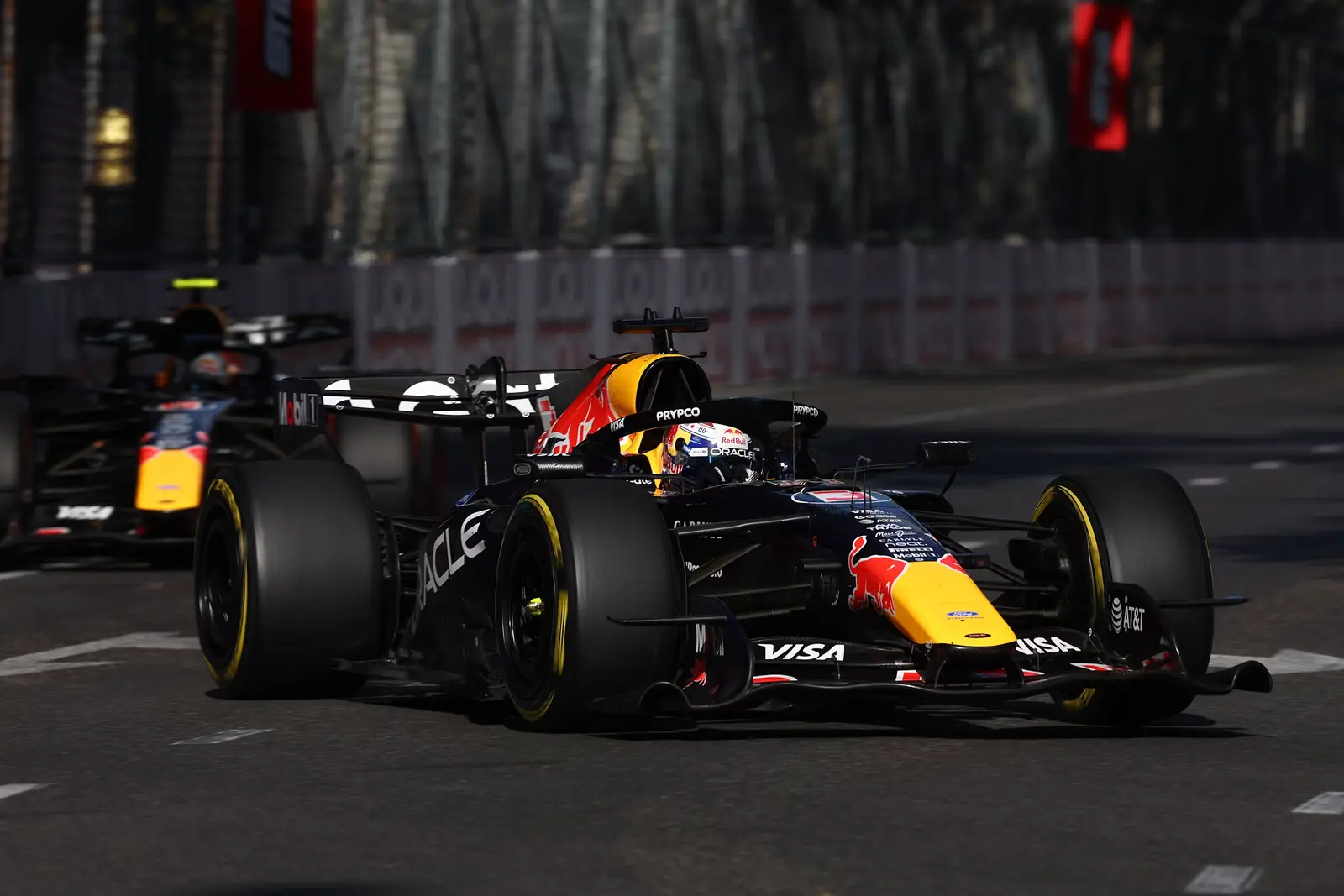
For Verstappen, the changes opened a route from eighth on the grid towards the lead. His FP3 pace had shown that the Red Bull could move quickly around Baku, yet a qualifying position in the middle of the leading group left him needing both clean overtakes and the right timing. He put himself in range for a final-lap attack as the Mercedes began to struggle.
The contrast between their Saturdays was especially sharp. Russell had the freedom to choose the first braking point after taking pole. Verstappen spent the early phase responding to cars and gaps around him, then found the pace to turn that disadvantage into a genuine shot at victory. Baku rewards confidence on the brakes and patience when a pass cannot be completed immediately. That combination kept the Red Bull in contention while the lead changed character through the interruptions.
The last lap nearly overturned everything
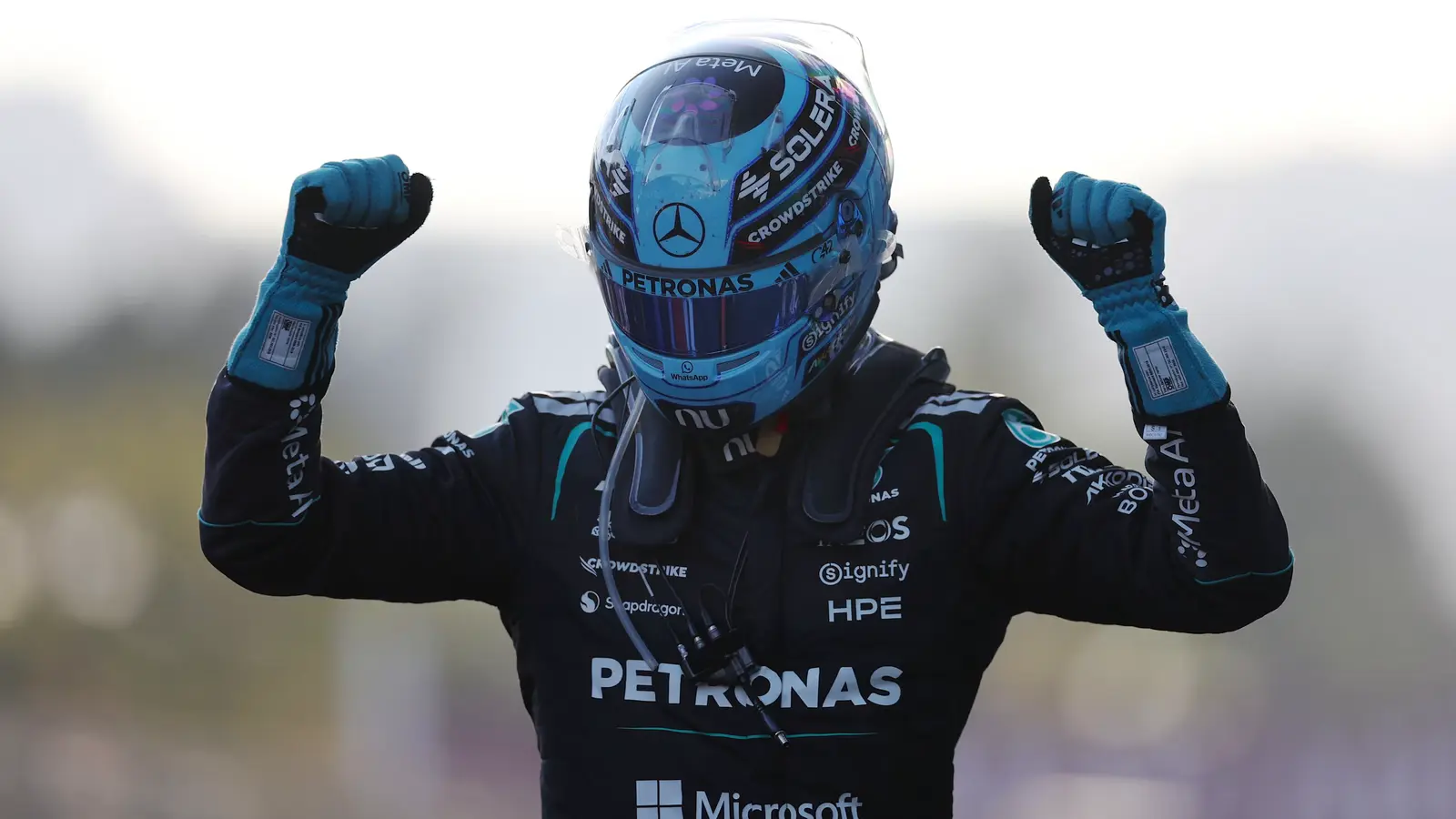
Russell reported a late power problem. With Verstappen bearing down, the lead that had survived the restarts became vulnerable in the final metres. Russell held his line and carried enough speed to the chequered flag. The official margin was 0.196 seconds. It was a victory earned through the full race distance, though the final straight ensured that no one in the Mercedes garage could celebrate early.
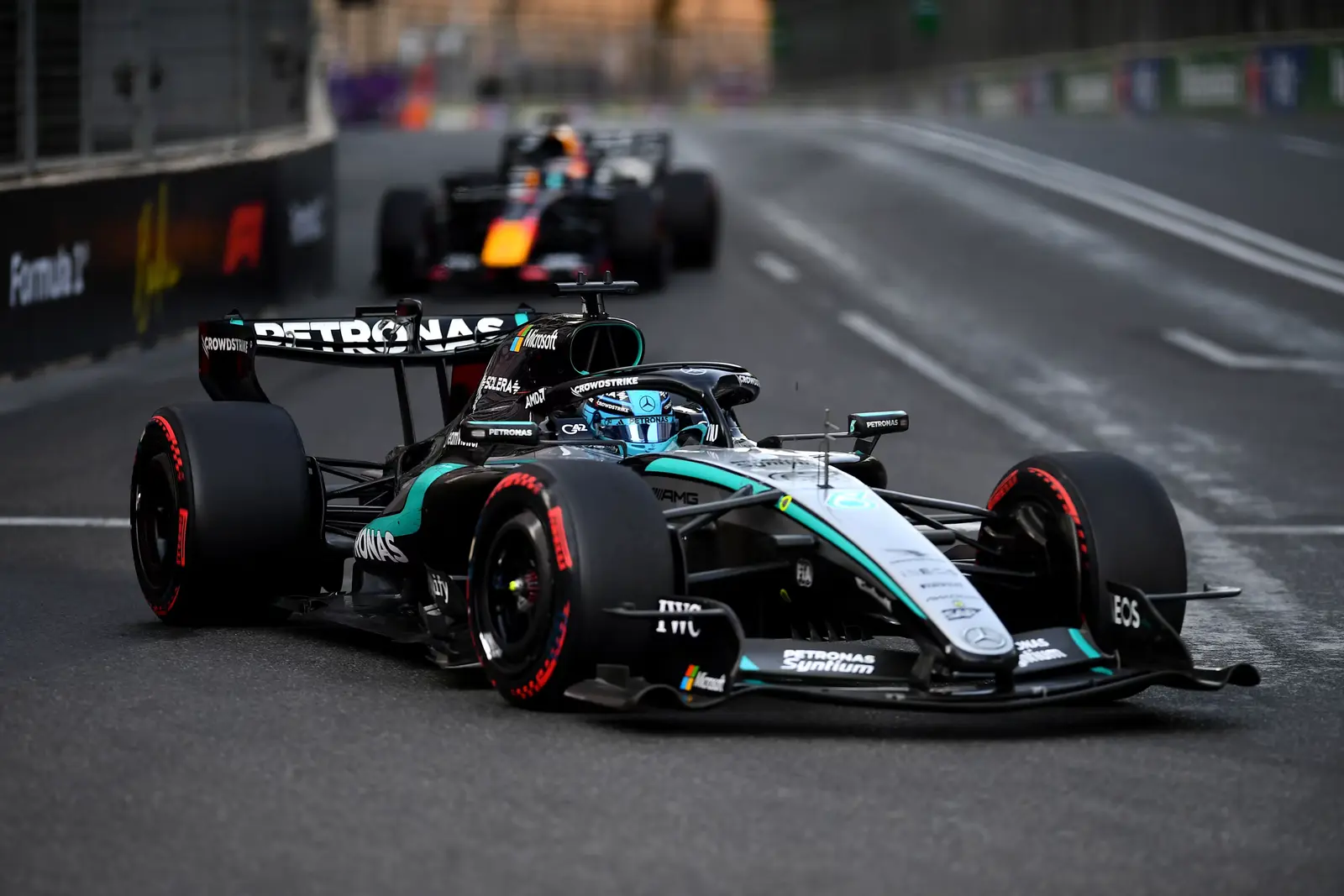
That slim advantage deserves context. The car that starts on pole and controls much of a street race still has to make it through every restart and every braking zone. A problem appearing late leaves a driver with few laps to adapt and little chance to build back the time lost. Russell did enough to keep the Red Bull behind when the result was reduced to a sprint to the line.
The closing margin also makes the technical issue more than a footnote. A race winner can appear in command on a timing screen while the car is becoming harder to defend. Russell’s account of the loss of power explains why the last straight looked so different from the earlier laps. The classification records one finishing gap, but the long view of the race shows the work that put him in a position to survive that final scare.
Hadjar’s podium and Antonelli’s recovery
Hadjar’s third place gave Red Bull a second car on the podium, with Leclerc in fourth and Antonelli in fifth. Antonelli’s result stood out after his disrupted opening practice, when a hydraulic issue cost him running, and a sixteenth-place qualifying position had left him a difficult path through the field. The points finish salvaged something substantial from a weekend that had looked much less promising on Friday.
Leclerc had qualified second and ultimately finished fourth. The result underlines how much the race order can diverge from the starting grid when Baku’s safety cars and overtaking opportunities intervene. The classification is the reliable final reference for positions, particularly after the late incident sequence and post-race reporting around the lower places.
Complete official classified result
Formula 1’s official result sheet lists all 22 starters. Fifteen cars were running at the flag, Bottas is shown in position 16 as a classified DNF, and six cars are marked NC. Bortoleto’s published time remains +44.230 seconds, the official note adds a 10-second penalty for overtaking under yellow flags.
| Pos. | No. | Driver | Team | Laps | Time / retired | Pts. |
|---|---|---|---|---|---|---|
| 1 | 63 | George Russell | Mercedes | 51 | 1:38:02.143 | 25 |
| 2 | 3 | Max Verstappen | Red Bull Racing | 51 | +0.196s | 18 |
| 3 | 6 | Isack Hadjar | Red Bull Racing | 51 | +10.704s | 15 |
| 4 | 16 | Charles Leclerc | Ferrari | 51 | +14.136s | 12 |
| 5 | 12 | Kimi Antonelli | Mercedes | 51 | +14.512s | 10 |
| 6 | 44 | Lewis Hamilton | Ferrari | 51 | +22.382s | 8 |
| 7 | 41 | Arvid Lindblad | Racing Bulls | 51 | +31.159s | 6 |
| 8 | 31 | Esteban Ocon | Haas F1 Team | 51 | +31.189s | 4 |
| 9 | 87 | Oliver Bearman | Haas F1 Team | 51 |
What comes next
The championship now moves to the Bahrain Grand Prix, hosted at Sepang International Circuit in Malaysia, scheduled for 2 to 4 October. Russell leaves Azerbaijan with a win that was convincing in its preparation and nerve-shredding in its conclusion. Verstappen leaves with proof of strong race pace and a reminder of the cost of starting eighth. Baku’s final 0.196 seconds will travel with both teams into the next weekend.