Hyundai Bayon India Reveal: The Real Test Is What Intelligence Can Do
Hyundai will reveal its India-spec Bayon on 26 October, with bookings already open for ₹11,000. The company has confirmed a 1.5-litre petrol engine and a technology-heavy cabin, but pricing is still to come and the promises will matter most when they meet ordinary Indian roads.
ViPeople India DeskPublished 11 min read
Photograph: Hyundai Motor India
Audio articleListen to this storySerena (Enhanced) · English UK
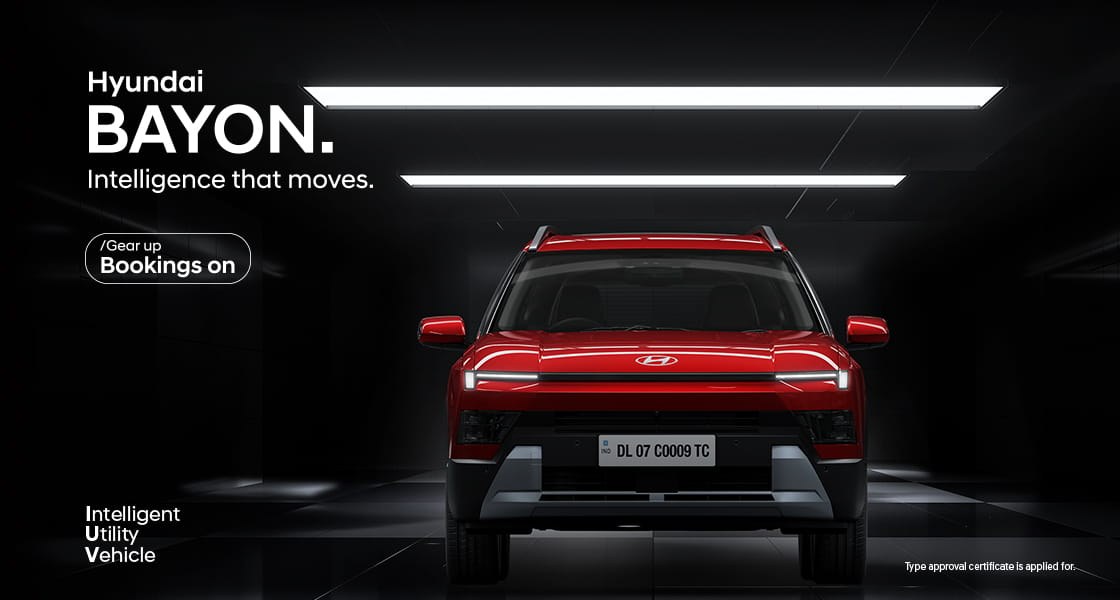
Hyundai’s India-spec Bayon arrives at its reveal with a promise built around intelligence. The company has framed the compact SUV as a connected, voice-led car, with a large screen pair and a generative assistant at the centre of the story. That pitch is intriguing. The more important question is whether the technology can make an ordinary drive feel simpler without adding unnecessary complexity.
The reveal is scheduled for 26 October 2026. Bookings have opened for ₹11,000, and Hyundai says deliveries are expected during the festive season. There is no announced price yet. That missing number matters. The eventual value of an equipment-rich cabin depends on where the Bayon sits in the market and which features are included in each version.
Hyundai’s India-spec Bayon exterior image ahead of the 26 October reveal. The price and final approval status have not yet been announced.Photograph: Hyundai Motor India
The mechanical brief is straightforward
Hyundai has confirmed a 1.5-litre MPi four-cylinder petrol engine producing 115 PS and 144 Nm. Buyers will be offered a six-speed manual or an IVT automatic. Those figures establish the basic character of the car more clearly than the technology language does. They describe a conventional petrol powertrain, with a choice between direct driver involvement and a continuously variable automatic transmission.
The final experience will depend on how the engine and gearbox behave together in traffic, on broken surfaces and at highway pace. Those are questions a launch specification cannot settle. We will need to drive the car and spend time with it before making claims about refinement, ride comfort, fuel use or real-world responsiveness.
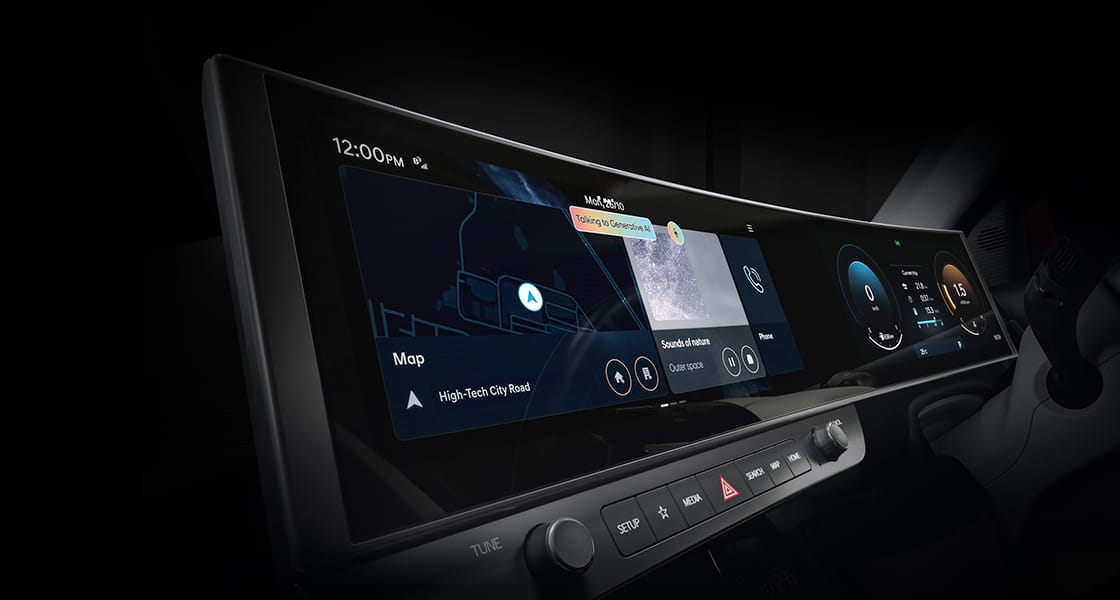
The Bayon cabin as shown on Hyundai’s official India product page, with its paired 12.3-inch displays. Availability and final equipment remain subject to the launch specification.Photograph: Hyundai Motor India
A connected cockpit with a very large promise
The official announcement describes two 12.3-inch displays and a Connected Car Navigation Cockpit accelerated by NVIDIA hardware. Hyundai says the assistant will combine its own connected-car systems with Intelligence by Perplexity and SoundHound. It also says the car can receive over-the-air updates across as many as 19 controllers and will offer more than 70 BlueLink features.
The details suggest a car whose software will be part of its identity from the first day. The usefulness will come down to practical things: whether voice requests are understood quickly, whether navigation information is clear, whether connected services behave consistently and whether updates add value without interrupting the owner. A large screen can attract attention at a launch. Trust is earned in the months after it.
The word intelligence can make a car sound more capable than the evidence yet allows. Hyundai’s announcement describes an assistant drawing on services from Perplexity and SoundHound, but the everyday experience will be defined by specific tasks. Can a driver ask for a nearby stop in a natural sentence? Does the answer arrive clearly enough to be useful? Can the system keep a simple request simple? These are the moments that turn a technology partnership into a real benefit.
There is a responsibility attached to that promise as well. Voice interfaces should help keep a driver’s eyes on the road, and menus should not demand attention at the wrong time. The safest measure of a connected cockpit is not the number of functions it can list. It is how well those functions fit around driving, including the option to ignore them and use familiar physical controls when that is easier.
Hyundai says the interface supports ten regional languages and two international languages, alongside more than 500 embedded voice commands in English, Hindi, Tamil, Bengali, Telugu and Hinglish. Those are notable claims in a country where people move between languages in daily life. The real test will be how naturally the system handles accents, road names, mixed-language requests and moments when the driver needs a simple answer without taking their attention from the road.
The language list gives the Bayon a chance to feel more local than a system designed around a single standard voice. The number of commands alone cannot tell us whether the car will recognise a place name spoken with a regional accent or understand a request that moves between Hindi and English. A proper review will need to test those cases in a quiet neighbourhood, in traffic and with the cabin full of ordinary road noise. Until then, the feature set is a substantial claim, and the user experience remains to be demonstrated.
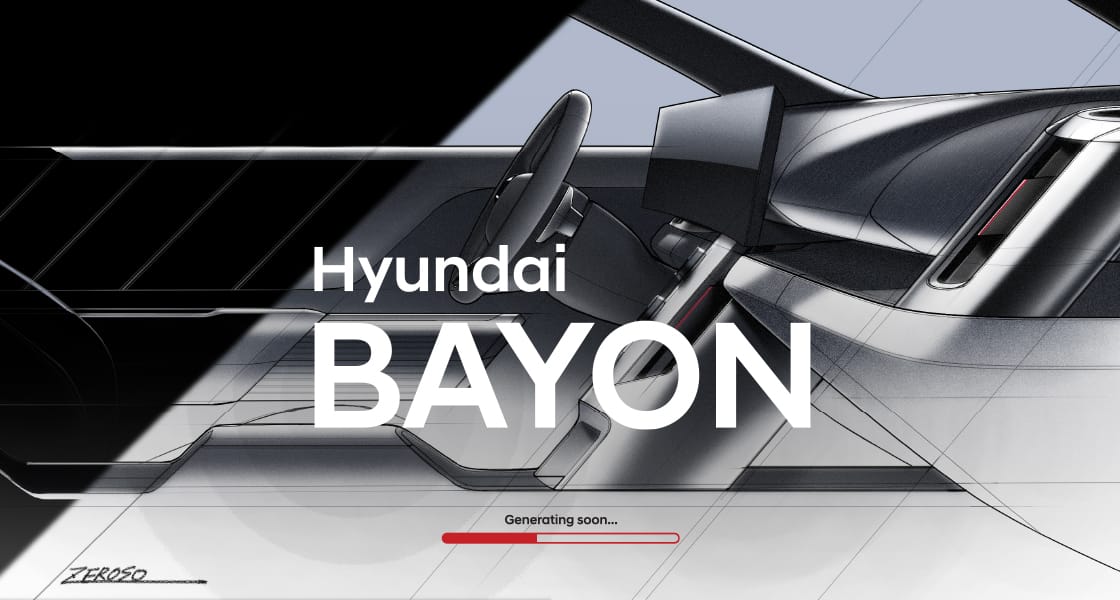
An official design sketch used in the Bayon preview. It is a styling illustration, not a photograph of the finished production car.Photograph: Hyundai Motor India
What bookings tell us, and what they do not
An ₹11,000 booking amount gives interested buyers a way to register before the price announcement. It is not a substitute for a full cost of ownership calculation. Insurance, variant equipment, service terms and the final on-road price will all affect the decision, while buyers should check the cancellation and refund terms directly with the dealer before placing a booking.
The company has not announced a price, so there is no sound basis yet for calling the Bayon a bargain or a premium choice. The same caution applies to equipment. Hyundai’s product page says type approval is being applied for. That is a status worth keeping in view as the reveal approaches, not an invitation to assume that every approval is already complete.
For a buyer, the best sequence is straightforward: wait for the price, compare the variant list, then decide whether the booking terms suit. A connected feature can be a genuine reason to choose one car over another, but it should sit beside the essentials. Visibility from the driver’s seat, rear-seat comfort, boot access, ride quality over a rough patch and the ease of parking all shape life with a compact SUV. A showroom demonstration can introduce the software. A test drive should answer the questions that screens cannot.
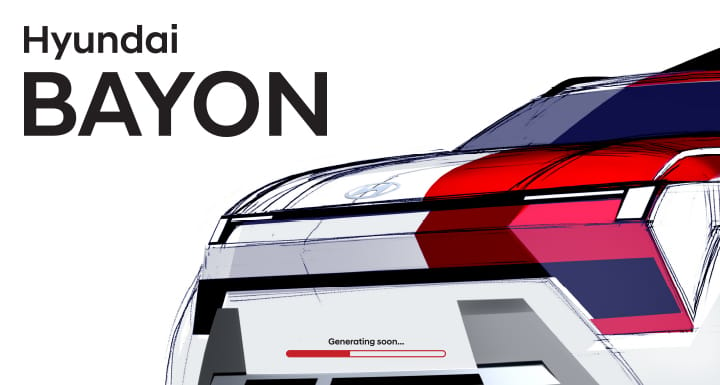
A second Hyundai design illustration ahead of the India reveal. The finished production vehicle may differ from the sketch.Photograph: Hyundai Motor India
The launch moment is only the opening chapter
The Bayon’s appeal will rest on the balance between familiar hardware and new software. The 1.5-litre petrol engine gives it a known starting point. The connected cockpit asks buyers to consider a different question: how much of a car’s character should come from the way its screens, assistant and online services work?
The figures at least provide a grounded starting point. A 115 PS petrol engine with 144 Nm and a choice of manual or IVT puts the conversation back on familiar terms. Owners will want to know how it pulls away in stop-start traffic, whether acceleration remains composed with passengers aboard and how the two transmissions alter the character. None of those impressions can be drawn from the output sheet. They belong to the road test that follows the reveal.
That question has no single answer. Some owners will value navigation and voice control every day. Others will care more about visibility, seat comfort, suspension response or the ease of parking. Hyundai has made technology the headline, but the car still has to work as a car first. We will know more after the reveal, the price announcement and a proper drive.
For now, the confirmed outline is promising and incomplete. The reveal date is set. The engine, output and gearbox choices are public. The cabin technology is ambitious. Price, final variant structure and the feel of the finished vehicle remain open questions. Those are the details that will determine whether the Bayon’s intelligence is more than a phrase in a launch presentation.
That is why the next week matters. The 26 October presentation should fill in the commercial details and show which ideas make it to the Indian car. After that, the first independent drive will have to test the bigger promise against small, familiar moments: finding a route, making a call, reversing into a tight space and settling into the cabin after a long day. A clever car should make those moments easier to live with. The Bayon has invited that test, and the answer is still ahead.
Comments0
Join the ViPeople conversationSign in with Google to comment, like and save stories.Continue with Google