The Tesla Roadster and the Day the Car Reached for the Sky
Nine years after its concept first appeared, Tesla has returned with an electric sports car whose reveal used fans, compressed-air thrusters and an airborne prototype. It felt like a moment from the future. The production car, its performance and its place on public roads still have to be proved.
ViPeople NewsroomPublished 9 min read
Photograph: Tesla / Car / Driver
Audio articleListen to this storySerena (Enhanced) · English UK
For a few seconds in Texas, the sports car left the grammar of the road. A white Tesla prototype climbed a steep curved track, held upside down by a fan system Tesla said could press it against the structure, then moved through the air under the force of compressed-air thrusters. Smoke, light and a careful landing completed the scene. It was a remarkable thing to watch. It was also a prototype demonstration, with the harder work still ahead.
Tesla revealed the second-generation Roadster on 15 October at a SpaceX testing facility in McGregor, Texas. The event drew together the two fields that have shaped the company’s public imagination: electric cars and aerospace engineering. Its central image was made to travel. A car upside down, then briefly airborne, makes a more vivid promise than another set of acceleration figures.
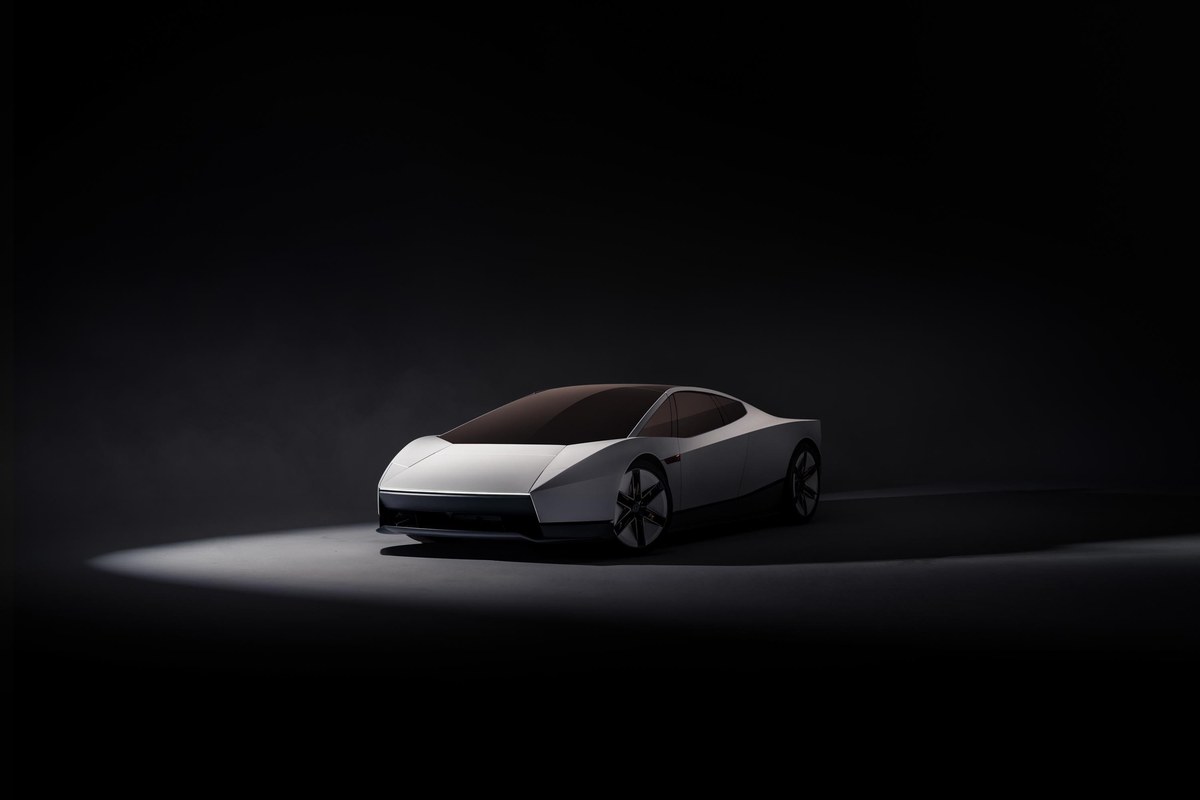
The second-generation Roadster is presented as a low, sharply tapered electric coupe. This is a press image from the October 2026 reveal, not a production specification sheet.Photograph: Tesla / Car / Driver
That image gives the unveiling a claim to historical significance, but not yet a settled place in automotive history. The production Roadster was not shown completing a road journey. Tesla has not published a final specification, a price or a firm delivery schedule. The stunt car and the car presented on stage were also different prototypes. The event was a glimpse of what the company wants this machine to become, not a public test of a finished model.
A name that already carries a chapter of electric history
The first Roadster helped establish Tesla as something other than a battery company with a vehicle programme. It was a low-volume sports car built around an electric drivetrain, and its point was emotional as much as technical. In 2008, when the market still associated electric cars with compromise, the Roadster put acceleration and desirability in the same sentence. It gave an unfamiliar company a recognisable shape and a reason for the world to pay attention.
The second generation was first presented in 2017. It was supposed to make the idea much larger: an electric grand tourer with extraordinary speed, room for two passengers and a place near the top of Tesla’s range. Then years passed. Other Tesla products reached customers, the battery industry changed, and the Roadster became a measure of how far a bold promise can travel without arriving.
That history makes the new reveal more than a delayed product debut. The Roadster is returning to a company that now builds vehicles at global scale and works openly beside SpaceX. The meaning of the name has expanded too. The original asked whether an electric car could make people want one. The new car asks how far a road vehicle can borrow from the language and hardware of flight without ceasing to be a car.
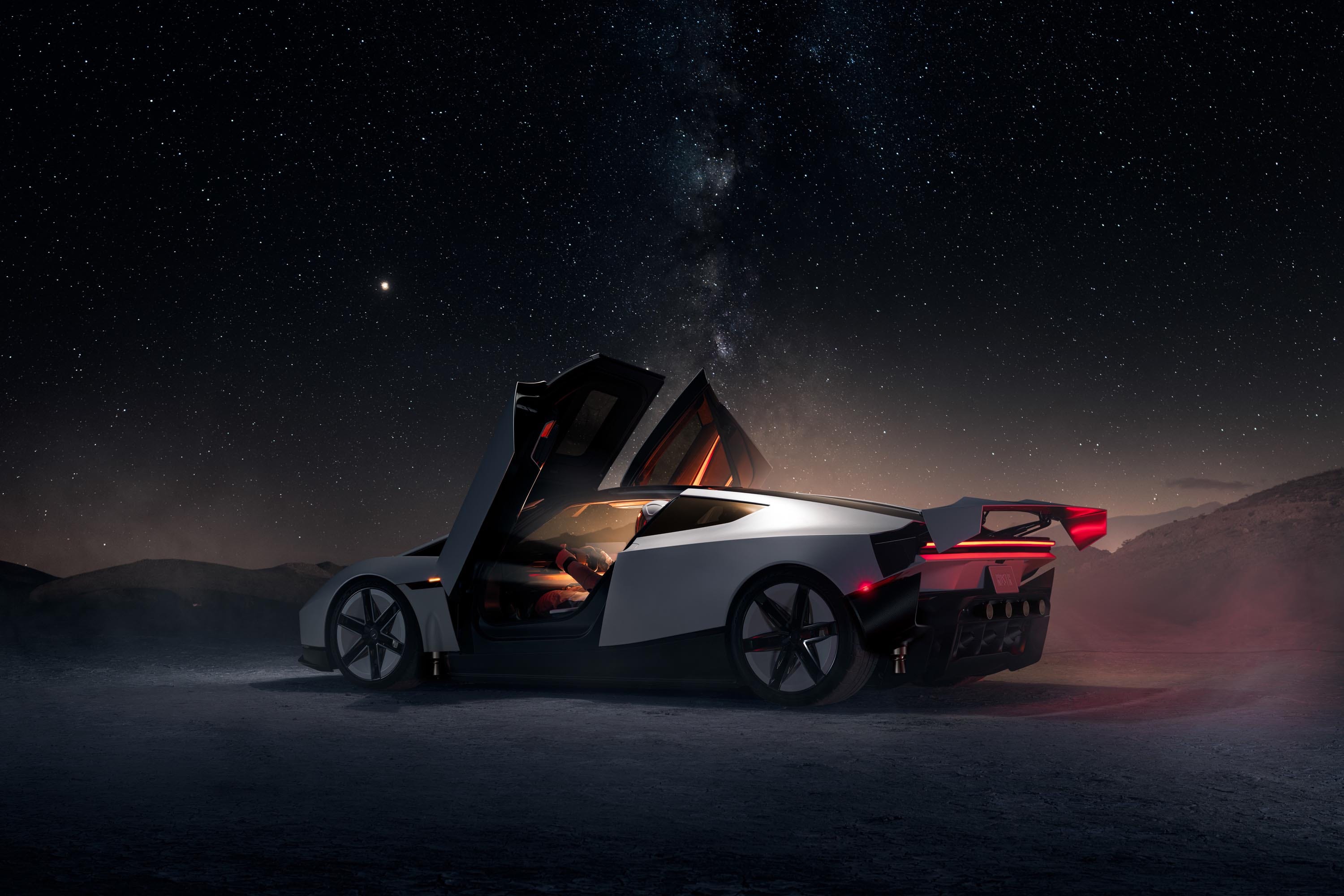
The butterfly doors open over a two-seat cabin. Tesla has not published a complete production interior specification.Photograph: Tesla / Car / Driver
Three versions, and three different answers to the same question
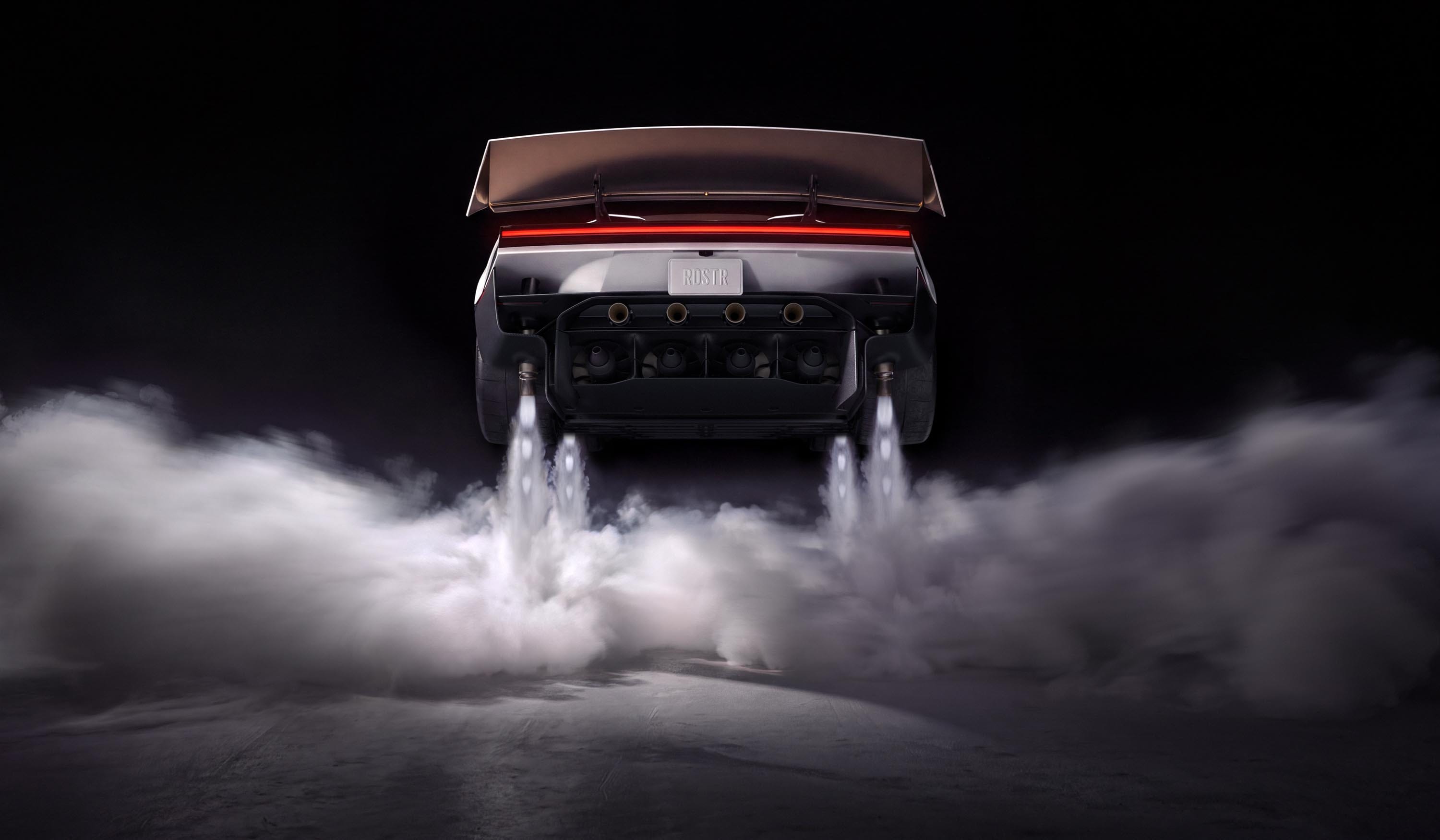
Tesla describes three configurations. Performance is the two-seat road car with an active rear wing and an underbody fan system. Thrust keeps that layout and adds rear-mounted cold-gas thrusters. Rocket goes further, with a single driver’s seat and thrusters around the car that Tesla says can move it upwards, forwards and sideways.
The labels matter because the most dramatic feature is not standard across the range. A customer choosing Performance would not be choosing the full thruster arrangement shown in the event demonstration. The Rocket configuration is a much more specialised proposition, and Tesla has not shown how its propulsion, packaging, safety systems or road approval would work in ordinary use.
The fan system is the other unusual idea. Tesla says it can create suction beneath the car at low speeds, increasing the force that holds the tyres against the road. In a conventional road car, aerodynamic downforce depends on air moving over shaped surfaces. A fan offers a different way to create pressure change, and in theory it can work even when the car is nearly stationary. The engineering questions are substantial: energy draw, heat, noise, debris, water, failure behaviour and how the system affects ride height and handling.
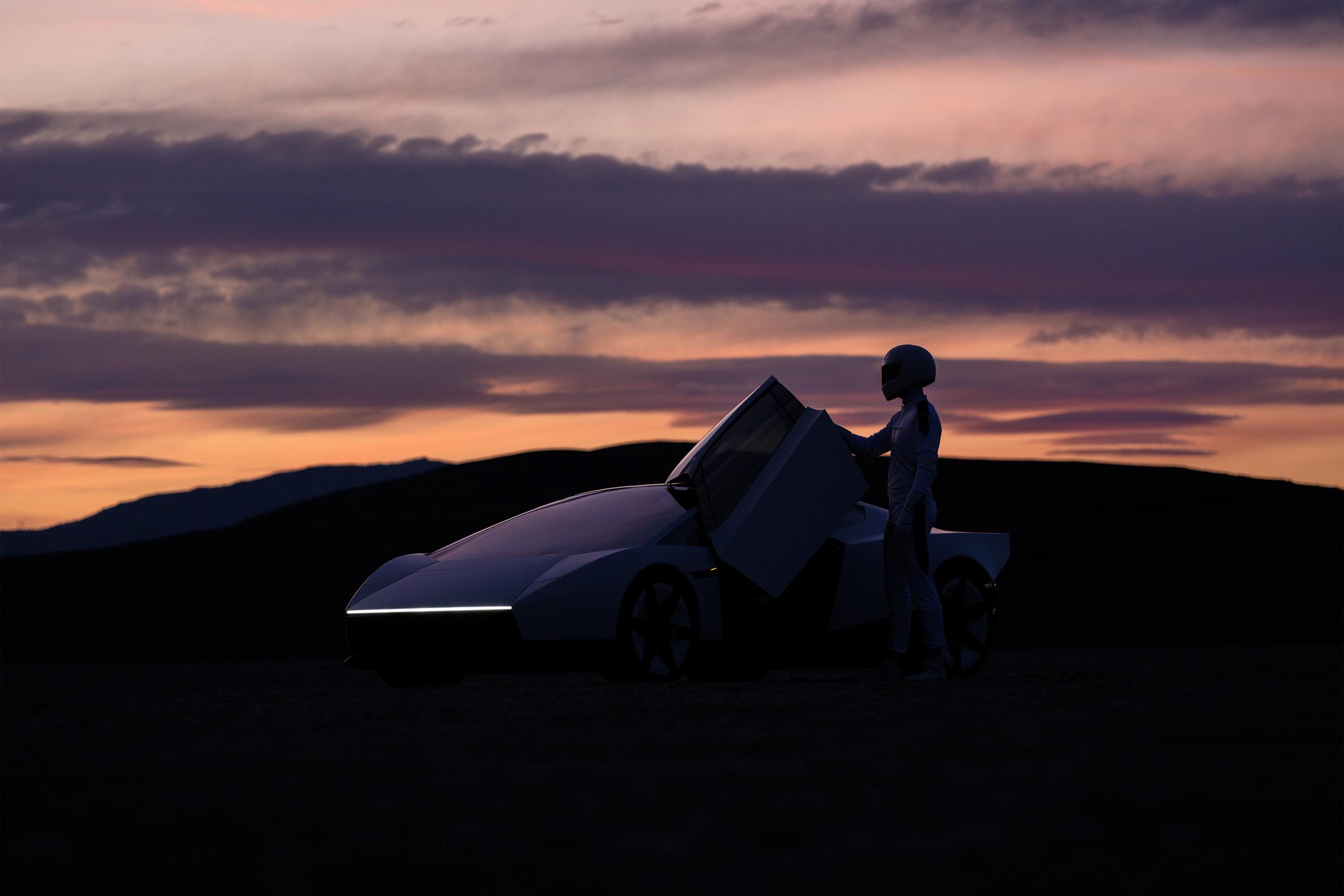
A person in a spacesuit stands beside the reveal car. The scene reflects the event’s aerospace theme, not a claim about the Roadster’s intended use.Photograph: Tesla / Car / Driver
The active rear wing is presented as a second layer of control. Tesla says it can move between high-drag and high-downforce modes, adjusting its angle as conditions change. It is a familiar performance-car principle paired with an unfamiliar underbody system. The value will be measured on a real circuit, where every gain in grip must survive braking zones, surface changes and long stints, not on a dramatic ramp.
The numbers are extraordinary, and they still belong to Tesla
At the reveal, Tesla claimed the Roadster could reach 60 miles per hour in less than a second. The company demonstrated a run that Elon Musk described as 0.8 seconds. Tesla also claimed a top speed above 230 mph. Those are manufacturer claims from an event presentation. There is no independent test of a production Roadster, and no production version has yet reached customers.
The distinction is not pedantry. A headline acceleration time can change with the test surface, tyre, battery state, launch method and whether a thruster system is involved. The public needs to know what configuration was tested, how the result was measured and whether it can be repeated by a car that meets normal road requirements. Until those questions have answers, the numbers describe ambition rather than established performance.
Tesla has said production is expected to begin in 2028. The company did not set a firm delivery date at the reveal. The cabin glimpsed on stage had butterfly doors, two seats and a wide horizontal display, though full production equipment and safety details remain unpublished. Pricing was also left open. These are major parts of the vehicle’s story, not small print.
A separate prototype performed the airborne stunt using the thruster system described by Tesla. The image records a controlled presentation demonstration.Photograph: Tesla / Car / Driver
A flight demonstration cannot answer the road question
The Roadster’s flying moment is a controlled demonstration of thrust, not evidence that the car has become an aircraft. Tesla described compressed air tanks feeding the thrusters. There is no public evidence that the production model will be certified for flight, that owners could use it away from a closed test area, or that the stunt configuration would meet the rules governing ordinary road vehicles.
That boundary is part of the story. The modern car is shaped by safety standards, braking distances, lighting rules, crash protection, battery controls and the duty to share roads with everyone else. A machine that can make a short hop has to be judged against those responsibilities before the spectacle can turn into useful transport. Musk himself acknowledged that legality could vary by jurisdiction.
The most meaningful test may therefore be the least cinematic one. Can Tesla deliver a comfortable, repeatable, safe and serviceable sports car that works on a public road, then make the extraordinary options dependable enough to justify their cost and complexity? Can it put the Roadster into production after a decade of waiting? A leap is only progress when there is somewhere safe to land.
The future is visible. The proof is still on its way
The event deserves to be remembered because it brought electric propulsion, active aerodynamic control and aerospace-style thrust into one unusually clear public demonstration. It placed a car in the air in front of a global audience and made the old boundaries between road performance and launch spectacle feel briefly less fixed. That is a historical image, even if its full meaning is still undecided.
The Roadster now has to exchange the impossible-looking stage for the patient work of engineering. A production specification, a verified test, an achievable delivery date and a road-legal car will give this story its next chapter. Until then, the right response is wonder with a clear eye. The Roadster has reached for the sky. Its place in history depends on what it can do when it comes back down.
Comments0
Join the ViPeople conversationSign in with Google to comment, like and save stories.Continue with Google